
Advocacy

Organization for Associate Degree Nursing

Advocacy

Associate Degree Nursing: An Essential Pathway for a Strong Nursing Workforce

Educate

Educate policymakers on the vital role of associate degree nursing programs in expanding access to safe, quality care nationwide.

Collaborate

Collaborate with organizations and leaders to advance opportunities for nurse educators and associate degree graduates.

Promote

Promote access to nursing education and careers that help communities thrive.

OADN advocating for you

A voice for associate degree nursing.

OADN Advocating for You: Minnesota

Watch the video

A place at the table

OADN Leads the Effort for Associate Degree Nursing

OADN’s purpose is to ensure that the voice of associate degree nursing is heard and represented anywhere decisions are made that affect our programs, faculty, and students.

We have made great strides in recent years. Leaders in government, non-profit organizations, and industry now seek out the counsel and input of associate degree nursing. OADN will continue to see that associate degree nursing is respected, equitably resourced, and recognized for our contributions to the health and welfare of the nation.

Policy & the nursing workforce

Latest Advocacy News

Read all news

Nursing Community Monthly Roundup – August 2026

As OADN members, you have a voice in the federal policy decisions that shape nursing education and the nursing workforce. Through our work with the Nursing Community Coalition, OADN advocates for federal funding, workforce investments, and policies that support ADN programs, faculty, students, and the communities they serve. Advocacy & Engagament NCC Sends Letter Urging [...]

Nursing Community Monthly Roundup – August 2026

As OADN members, you have a voice in the federal policy decisions that shape nursing education and the nursing workforce. Through our work with the Nursing Community Coalition, OADN advocates for federal funding, workforce investments, and policies that support ADN programs, faculty, students, and the communities they serve. Advocacy & Engagament NCC Urges Senate Homeland [...]

National representation

OADN on Capitol Hill

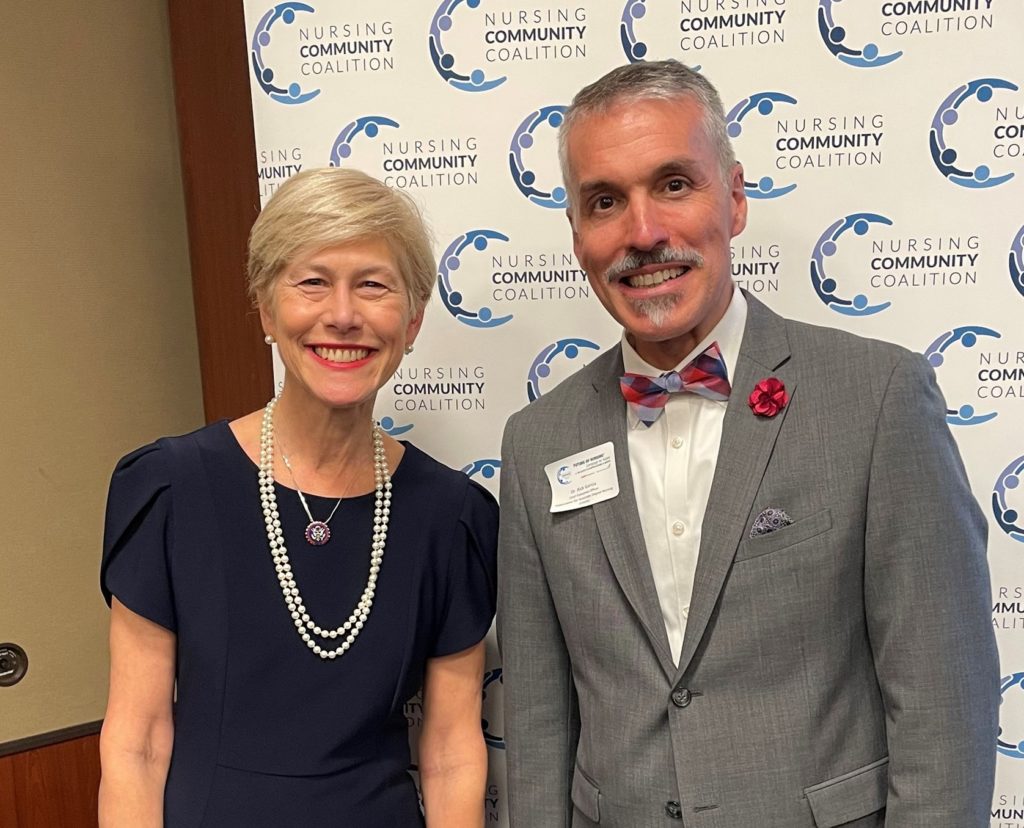
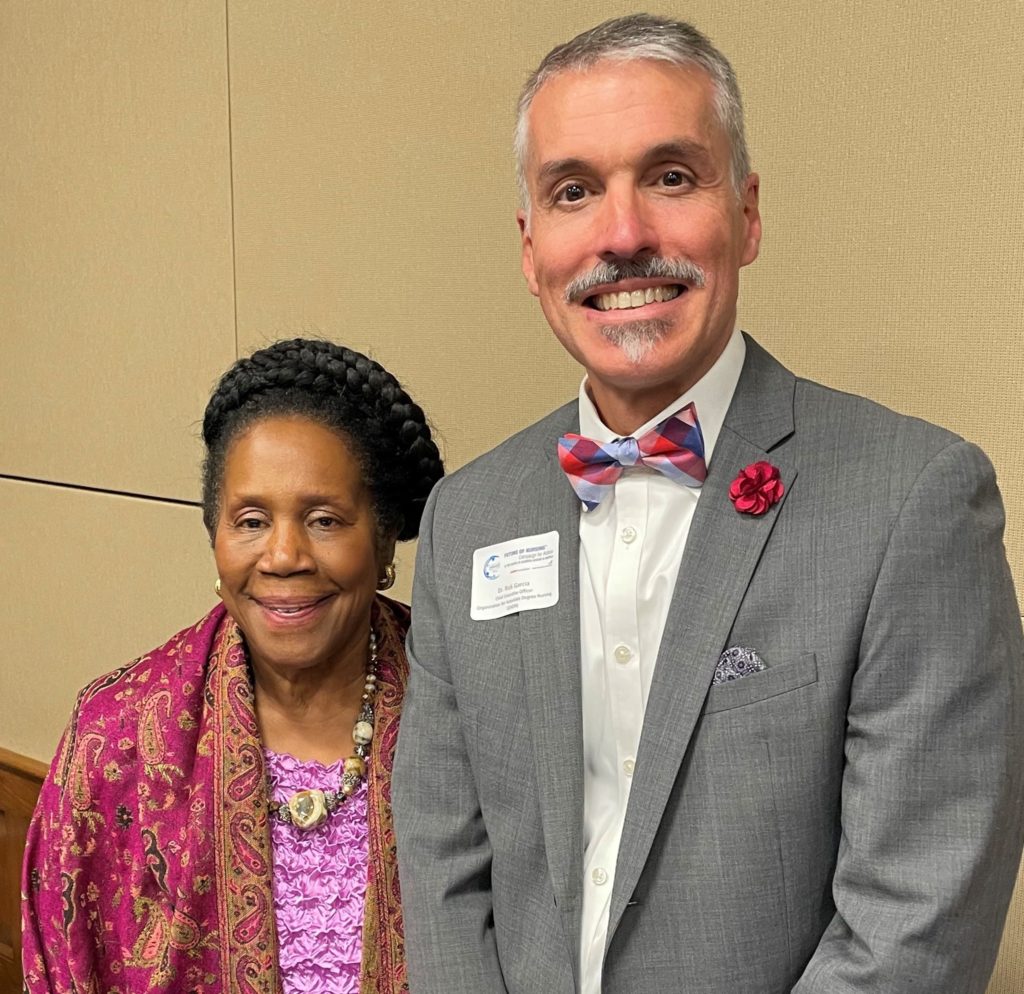
OADN CEO Dr. Rick García meets with Reps. Lauren Underwood (D-IL-14), Deborah Ross (D-NC-02), and Sheila Jackson Lee (D-TX-18) on February 8, 2023 in Washington, DC.

The future of nursing

Donna Meyer Delivers Invited Comments to the Institute of Medicine

Donna Meyer, MSN, RN, ANEF, FAADN, past OADN CEO and current President of the OADN Foundation, delivers comments on the Future of Nursing 2020-2030 report at a meeting convened by the National Academies of Health & Medicine.

Watch her remarks

Workforce impact

Community colleges educate over 50% of newly licensed registered nurses, graduating an average of 81,000 nurses annually (12:54–13:06).

Educational progression

OADN has been a leader in promoting seamless academic progression for nurses, including co-founding the National Education and Progression in Nursing (NEPIN) collaborative, which aims to help ADN graduates attain their BSN (13:10–13:56).

Community focus

Community college graduates are uniquely suited to understand the social determinants of health and the cultural needs of their local communities, as they often choose to live and work in the areas where they are educated (16:00–16:20).

Commitment to collaboration

OADN strongly supports the Future of Nursing 2020-2030 report, advocating for a unified nursing profession to ensure that a “culture of health” becomes the norm rather than the exception (16:44–17:15).

Resources for our community

OADN Position Statements & Advocacy Documents

OADN Position Statement on Population Health and Population Health Management

For nursing education, particularly within associate degree curricula, population health is defined as learning activities that “address the assessment, intervention, and evaluation of populations impacted by social determinants of health, how health information and healthy behaviors is promoted to populations, how disease can be prevented through public education and policy influencers, and the nature, types […]

OADN Position Statement on Transition to Practice

The ultimate goal of all pre-licensure nursing programs is to focus on preparing individual nurses for entry into point-of-care positions in a variety of settings from acute care, long-term care, primary care, and more. Regardless of the success of quality nursing education programs in preparing students for practice, these entry level graduates benefit from programs […]

OADN’s Written Testimony To The Future Of Nursing 2020-2030 Committee

OADN is committed to providing accurate and timely information on the importance of associate degree nursing programs and graduates in ensuring health care access and a diverse nursing workforce that provides safe, quality, culturally competent care. To this purpose, on March 20, 2019, OADN delivered invited testimony to the inaugural meeting of the National Academy […]

OADN Position Statement on Academic Progression

The Organization for Associate Degree Nursing (OADN), as the voice for Associate Degree Nursing (ADN), promotes the advancement of ADN graduates through the promotion of best practices in nursing education and academic progression. OADN supports the Institute of Medicine’s (IOM), The Future of Nursing: Leading Change, Advancing Health report recommendations dated 2010 and the Assessing [...]

OADN and the ACEN Release Regulatory Guidance

On July 1, 2020, revised United States Department of Education (USDE) regulations became effective, and one particular revised FINANCIAL AID REGULATION affects all undergraduate or graduate programs (including nursing) that lead to professional licensure and are eligible for any student financial assistance program authorized by Title IV of the Higher Education Act of 1965, as amended. Please consult your office of institutional […]

National Center for Apprenticeship Degrees Advocacy Playbook

National Center for Apprenticeship Degrees Advocacy Playbook Executive Overview   THE CHALLENGE & OPPORTUNITY OF POSTSECONDARY EDUCATION Every year, millions of Americans are forced to choose between pursuing a degree and securing a paycheck. Nearly two-thirds of jobs in the US demand postsecondary education¹, yet approximately half of the American workforce lacks a degree.² An […]

OADN Position Statement on Accreditation

The Organization for Associate Degree Nursing (OADN), as the leading advocate for associate degree nursing (ADN), promotes voluntary specialized accreditation for associate degree nursing programs as a means to enhance educational quality. Accreditation is a peer-reviewed process, based on identified standards and a system of assessment, evaluation, and continuous improvement. Accreditation not only serves the […]

Statement of ANA and OADN Joint Position: Academic Progression to Meet the Needs of the Registered Nurse, the Health Care Consumer, and the U.S. Health Care System

Statement of ANA and OADN Joint Position All nurses must have access to seamless academic progression through high- quality, accredited nursing education programs that will meet the anticipated demand for qualified nurses over the next several decades. The Organization for Associate Degree Nursing (OADN) and American Nurses Association (ANA) commit to partnering with nursing and […]

Joint Statement on Academic Progression for Nursing Students and Graduates

Nursing is by far the largest healthcare profession in the U.S. with more than 2.6 million registered nurses (RNs) practicing in hospitals and other settings nationwide. Despite their large numbers, many more qualified nurses must be prepared in programs offered by community colleges and four-year institutions to meet the nation’s growing demand for health care […]

17th Annual NACNEP Report to Congress: Preparing Nurse Faculty and Addressing the Shortage of Nurse Faculty and Clinical Preceptors

The National Advisory Council on Nurse Education and Practice (NACNEP) has released its 17th annual report to Congress titled Preparing Nurse Faculty and Addressing the Shortage of Nurse Faculty and Clinical Preceptors. NACNEP is calling on a public-private response to develop, support, and fund a wide range of initiatives to address the shortage of nurse faculty […]