 OADNOADN
08/28/26
Real Talk is an OADN video series focused on the challenges, questions, and conversations shaping nursing education today. Through candid discussions with experienced nurse educators and leaders, the series explores topics such as faculty resilience, professionalism, incivility, communication, leadership, and the evolving realities of academic and clinical education. Each conversation moves beyond theory to offer practical perspectives, strategies, and tools nurse educators can apply in their own classrooms, programs, and professional environments.
Each month, OADN members are invited to a live Watch Party for the newest Real Talk episode. These members-only conversations provide a safe space to continue the dialogue with our speakers and fellow nurse educators through candid, real-time discussion. Watch Parties are intentionally informal, exclusive to OADN members, and are not recorded.
View the Real Talk Playlist

Dr. Cherie Rebar and Dr. Nicole Heimgartner are a powerhouse duo in nursing education, known for their dynamic presence, practical innovation, and deep commitment to faculty and student success. Together, they bring decades of combined experience in academic leadership, clinical nursing, curriculum development, and faculty mentorship. Cherie and Nicole are nationally recognized nursing professors, academic strategists, curricular experts, and published authors with a shared passion for bridging the gap between theory and practice. Known for engaging teaching and a commitment to evidence-based practice, they bring tangible takeaways and actionable tools to the challenges facing today's nurse educators. Whether empowering faculty or preparing the next generation of nurses, they share a mission to make nursing education more relevant, responsive, and real.

This episode is part of the ongoing Real Talk conversation on incivility in nursing education. It examines how microaggressions can act as an undercurrent that shapes culture, affects psychological safety, and influences belonging, learning, and professional growth.
Topics discussed include:The conversation also asks educators to reflect on language they may have used or heard differently in the past and to identify practical actions they can take to build more inclusive learning environments.
This episode brings together recurring questions raised throughout the Real Talk conversations and examines the difficult moments that repeatedly show up in nursing education.
Rather than simply naming incivility, the conversation focuses on practical language, grounded strategies, and student-centered responses nurse educators can use in classrooms, clinical settings, meetings, and program culture.
Topics discussed include:
The conversation examines the everyday interactions where incivility can emerge among students, faculty, and within clinical environments, and what it looks like to interrupt those behaviors with clarity, professionalism, and intention.
Topics discussed include: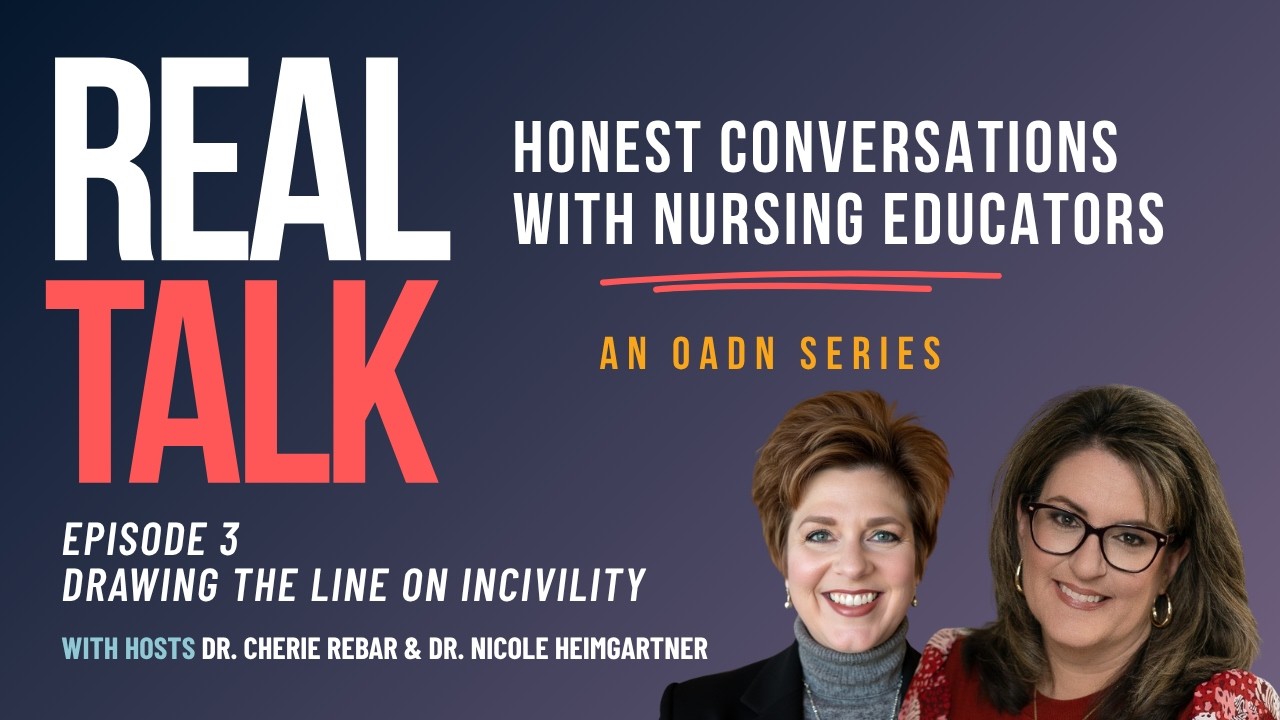
Dr. Cherie Rebar and Dr. Nicole Heimgartner are joined by Dr. Daniel Flores for an honest conversation about incivility in nursing education and clinical practice.
Together, they explore how uncivil behaviors develop in academic and healthcare environments, the roles that fear and workplace pressures play in shaping professional culture, and why behaviors tolerated during nursing education often continue into clinical practice.
Topics discussed include: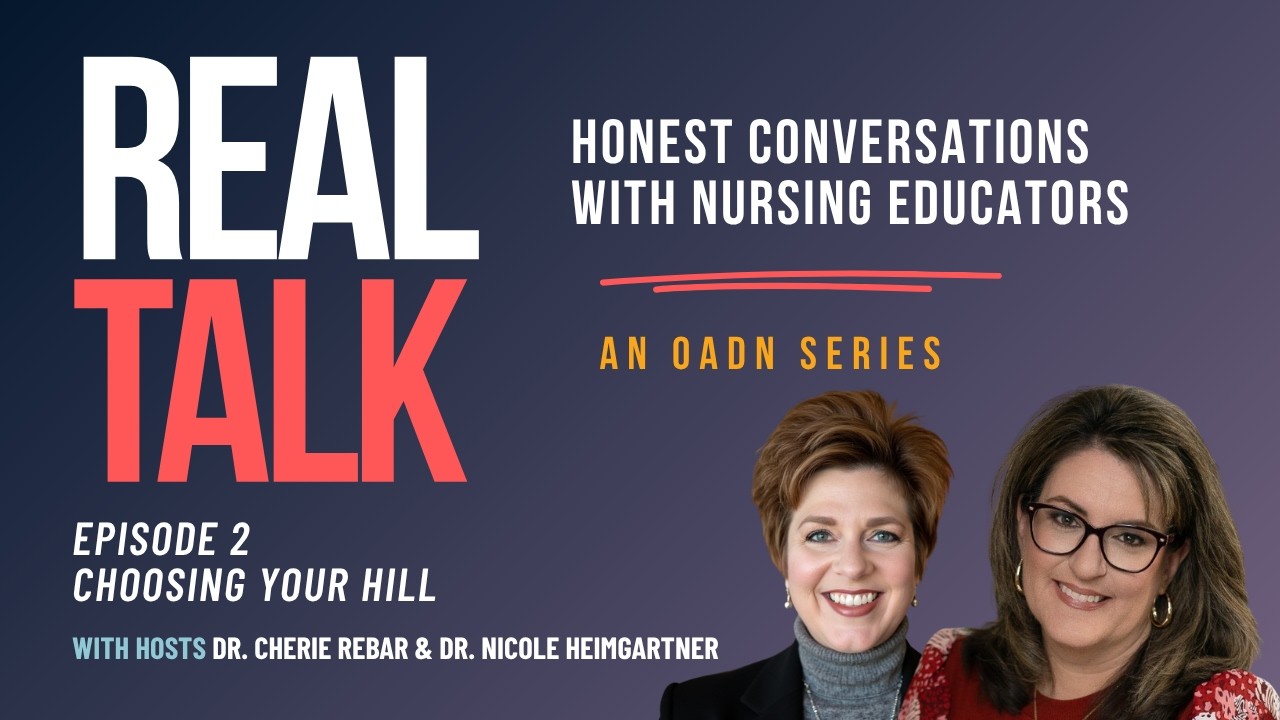
Dr. Cherie Rebar and Dr. Nicole Heimgartner discuss the concept of “choosing your hill,” a leadership principle that encourages nurse educators to thoughtfully determine when to advocate, when to establish boundaries, and when to step back.
Topics discussed include:
Dr. Cherie Rebar and Dr. Nicole Heimgartner explore the importance of resiliency in nursing education and strategies faculty can use to navigate the challenges of academic and clinical teaching environments.
Drawing from decades of experience as nurse educators, authors, and leaders in the profession, they discuss the realities of faculty workload, the emotional labor of teaching, and the importance of sustaining professional purpose in an evolving healthcare landscape.
Topics discussed include: