The Nurse Educator Minute – Powered by Lippincott®
08/28/26
FACULTY DEVELOPMENT RESOURCE
The Nurse Educator Minute – Powered by Lippincott®
Helping nurse educators teach with confidence. Explore monthly expert videos featuring evidence-based strategies, innovative teaching practices, and practical tools that strengthen student success and prepare practice-ready nurses. Powered by Lippincott® and OADN's commitment to educator excellence.
#46
August 2026
Designing Learning that Mirrors Practice
In this month's video, Dr. Yuchs demonstrates practical strategies for aligning the CJMM...
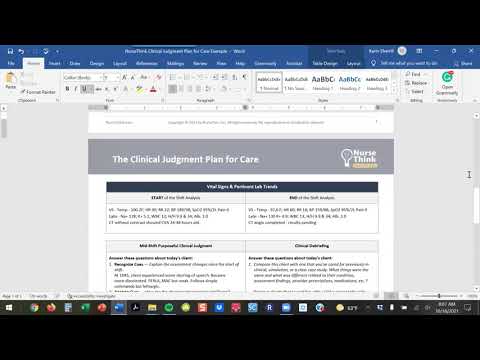
In this month's video, Dr. Yuchs demonstrates practical strategies for aligning the Clinical Judgment Measurement Model with learning experiences that mirror the practice environment.
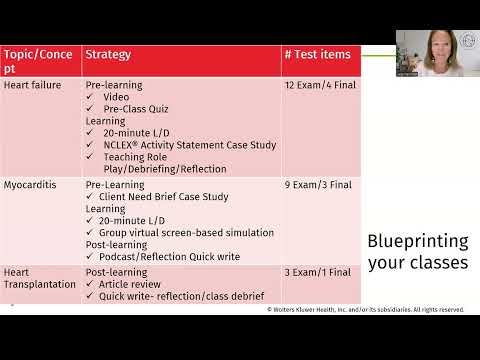
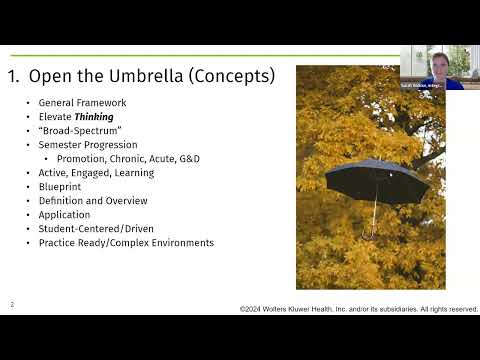
Although proven to be effective in teaching, our learners often need encouragement to engage in active learning...
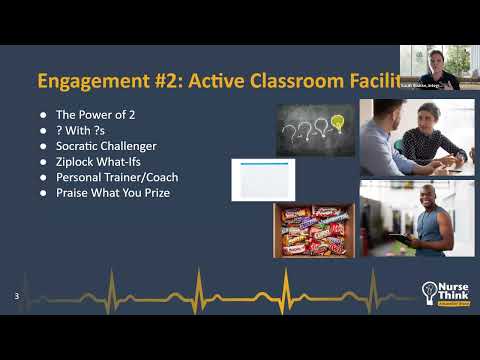
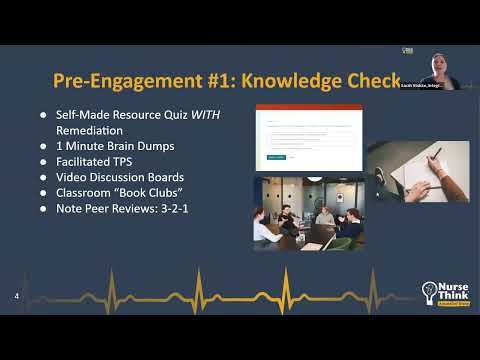
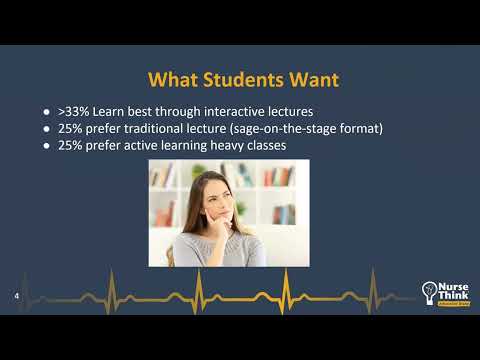
Although proven to be effective in teaching, our learners often need encouragement to engage in active learning strategies. In this month's video, Dr. Judy Herrman shares the new practice of blueprinting learning activities, much like blueprinting exam items, to ensure fidelity to class outcomes, gain student buy-in, and achieve content validity in formative/summative assessment measures.
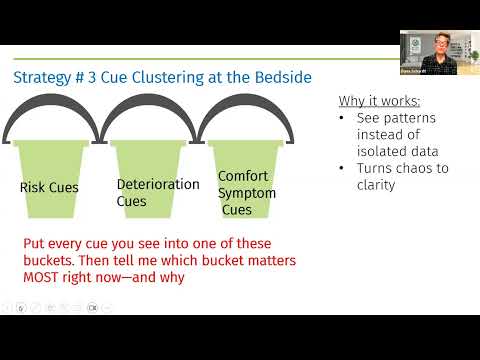
This is the third video in a three-part series. Dr. Dana Schardt introduces a quick, practical strategy to help students make sense of clinical...
This is the third video in a three-part series. Dr. Dana Schardt introduces a quick, practical strategy to help students make sense of clinical data by sorting cues into three clusters: Risk, Deterioration, and Comfort/Symptom. This approach supports learners in identifying patterns, strengthening prioritization, and clinical reasoning, turning clinical chaos into clarity.
This is the second video in a three-part series. Dr. Dana Schardt demonstrates how a brief 2-3-minute Clinical Judgment Huddle can transform...
This is the second video in a three-part series. Dr. Dana Schardt demonstrates how a brief 2-3-minute Clinical Judgment Huddle can transform student reasoning at the bedside. Using a structured five-step approach: identify key cues, state the top concern, choose one priority action, explain the why, and anticipate complications, faculty can coach real-time thinking aligned with the Clinical Judgment Measurement Model.
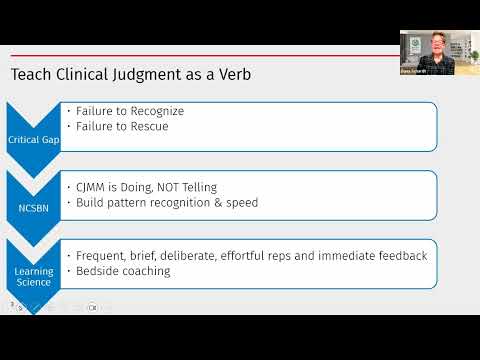
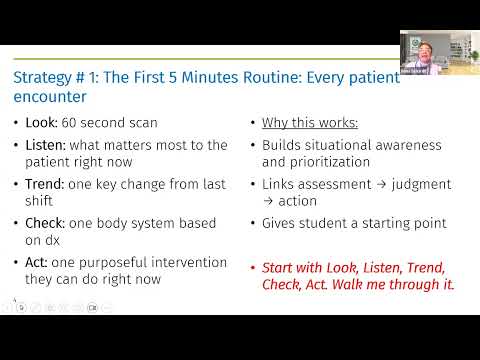
This is the first of a three-part series. In this video, Dr. Dana Schardt teaches faculty how to develop clinical judgment from the start of...
This is the first of a three-part series. In this video, Dr. Dana Schardt teaches faculty how to develop clinical judgment from the start of every patient encounter using the First 5 Minutes Routine. By guiding students through Look, Listen, Trend, Check, and Act, faculty help learners build situational awareness, reduce anxiety, and connect assessment to priority actions, strengthening clinical judgment and safe practice.
Top 3 Tips for Transition to Practice Across the Curriculum
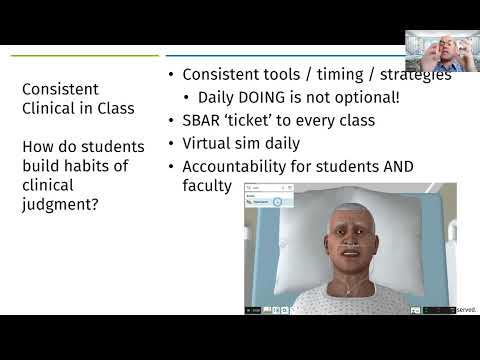
In this video, Dr. Tim Bristol encourages faculty to enhance readiness for practice by using the three C's. These include challenging students...
In this video, Dr. Tim Bristol encourages faculty to enhance readiness for practice by using the three C's. These include challenging students to create, consistently using clinical in class, and crossing strategies and methods across the curriculum.
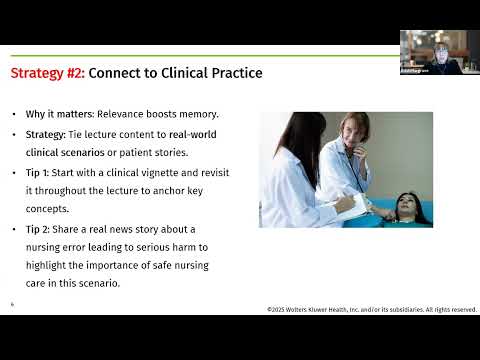
Faculty are well aware of the challenges of teaching to promote deep learning. This video provides practical strategies to encourage students to...
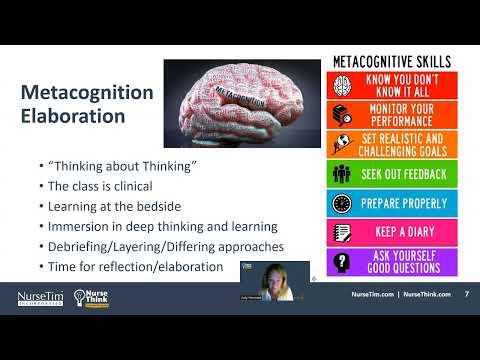
Faculty are well aware of the challenges of teaching to promote deep learning. This video provides practical strategies to encourage students to engage in material while participating in clinically-based methods to promote retention and safe nursing practice.
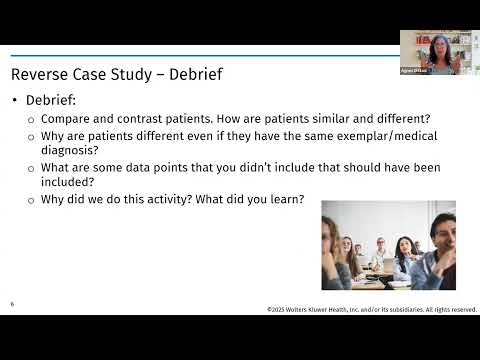
Participants will learn how to design and implement a reverse case study in which students collaboratively create patient cases, analyze...
Participants will learn how to design and implement a reverse case study in which students collaboratively create patient cases, analyze clinical data, and share insights through structured group work. The presentation highlights three key components for success: student preparation, peer teaching and learning, and debriefing to ensure meaningful engagement and knowledge synthesis.
Top Three (and more) Tricks for Using Electronic Health Records as a Teaching Tool
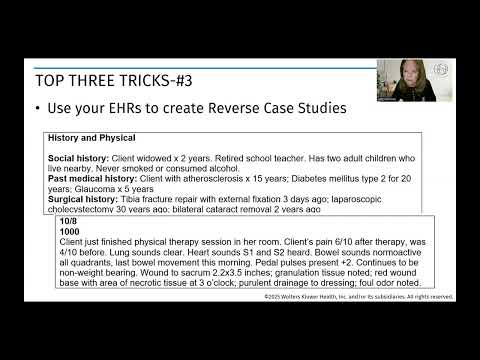
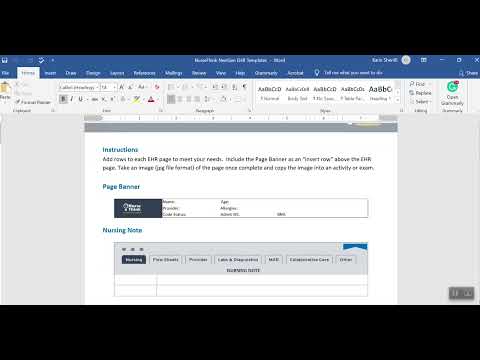
Changes in NCLEX and the impetus for teaching using cases has invigorated the practice of using electronic health records (EHRs) when...
Changes in NCLEX and the impetus for teaching using cases has invigorated the practice of using electronic health records (EHRs) when introducing realistic scenarios for nursing students. This video provides more than three ways to use EHRs in any learning setting to enhance clinical judgment, student engagement, and nursing knowledge in your students.
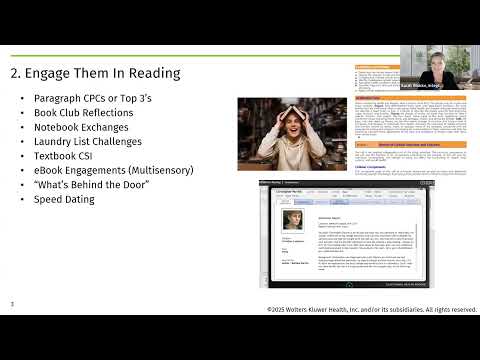
Have you felt like you have students that have never even opened a book? Do you feel exhausted at the end of the day trying to stress the...
Have you felt like you have students that have never even opened a book? Do you feel exhausted at the end of the day trying to stress the importance of topics in your classroom? Do you find yourself repeating the same thing over and over again? Watch this video to learn 3 easy ways to motivate your students to become curious and engaged readers in your classroom.
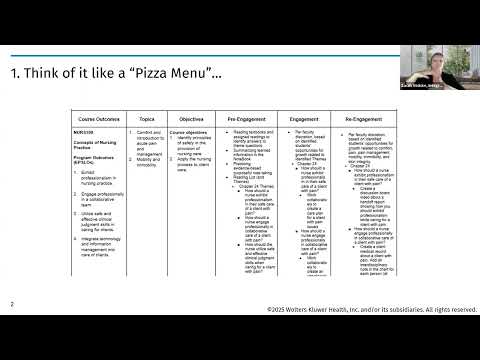
Have you always had a love/hate relationship with your lesson plan? Do you only look at your lesson plan a couple of times a semester? Watch...
Have you always had a love/hate relationship with your lesson plan? Do you only look at your lesson plan a couple of times a semester? Watch this video to learn 3 easy ways to upgrade your lesson plan to a tool that you will utilize every day to build a data-driven classroom that is based in engaging your students and helping them to learn.
Learn how to help students really learn from their classroom activities. Here are 3 easy steps to promote frequent and immediate feedback in...
Learn how to help students really learn from their classroom activities. Here are 3 easy steps to promote frequent and immediate feedback in class by taking the answer keys out of the equation.
Classroom Evaluation Tool Top 3: A New Way of Looking At Formative Grading
Learn how to build safer, more effective nurses in your classroom by measuring and building upon your Student Learning Outcomes from day 1. Take...
Learn how to build safer, more effective nurses in your classroom by measuring and building upon your Student Learning Outcomes from day 1. Take the headache out of grading with these 3 easy steps.
Have you ever struggled with students and helping them to get it? Learn new active learning strategies, including Retrieval Practice, to help...
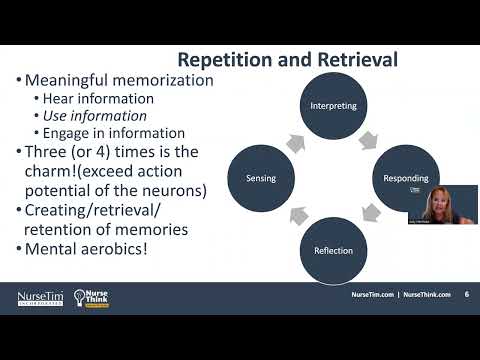
Have you ever struggled with students and helping them to get it? Learn new active learning strategies, including Retrieval Practice, to help your students really take their reading and learning to a new level.
How Do I Promote DEEP Learning with Retrieval Practice?
Help your students to make a connection between what they are learning in the classroom to what they will be doing as a nurse at the bedside....
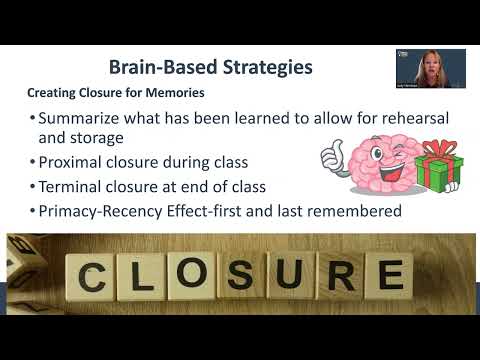
Help your students to make a connection between what they are learning in the classroom to what they will be doing as a nurse at the bedside. Learn some brain-based strategies that help your students really learn the information for life so that they can apply it in their future career.
How Do I Promote DEEP Learning with Effort, Calibration, and Elaboration?
Learn how to get your students to dive deeper into what they are learning. Implement creative strategies to utilize effort, calibration, and...
Learn how to get your students to dive deeper into what they are learning. Implement creative strategies to utilize effort, calibration, and elaboration to help your students apply their knowledge and bring their reading to life.
Learn how to get your students to learn how to learn. Learn ways to deal with student barriers and give students what they actually need to...
Learn how to get your students to learn how to learn. Learn ways to deal with student barriers and give students what they actually need to learn. Learn engaging strategies to challenge your students to apply deep learning in your program.
Case Studies: 3 Ways to Bring Your Students to Clinical in Every Class, Lab, Clinical, and Simulation
Learn how to bring your students to the bedside in every nursing school experience utilizing case studies to continue building their clinical...
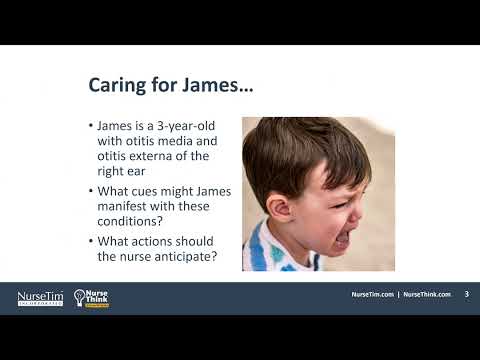
Learn how to bring your students to the bedside in every nursing school experience utilizing case studies to continue building their clinical judgment muscles.
As faculty, we feel the need to answer all of our students' questions, but is that what is best for their learning? Gain some tips from an...
As faculty, we feel the need to answer all of our students' questions, but is that what is best for their learning? Gain some tips from an expert educator on how to best respond when asked, But...what's the answer?
It's difficult to get students to think beyond the test. These suggestions provide a strategy to get students to focus on learning and not the...
It's difficult to get students to think beyond the test. These suggestions provide a strategy to get students to focus on learning and not the next exam.
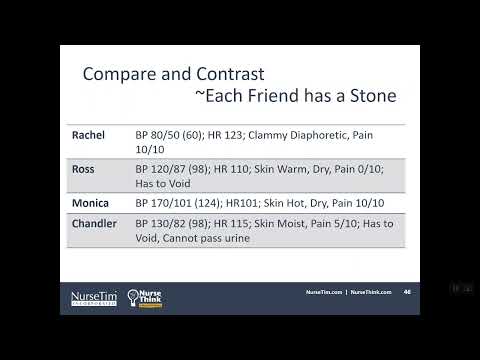
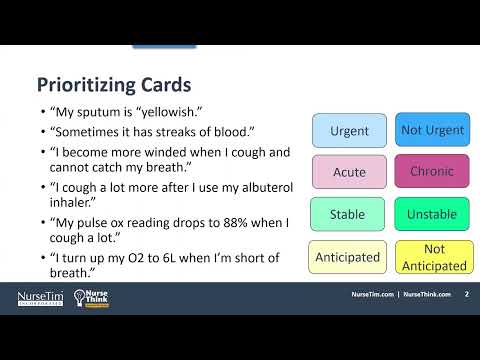
Compare and contrast 4 cases with different presentations. Students can be challenged with not understanding why each patient does not mimic the...
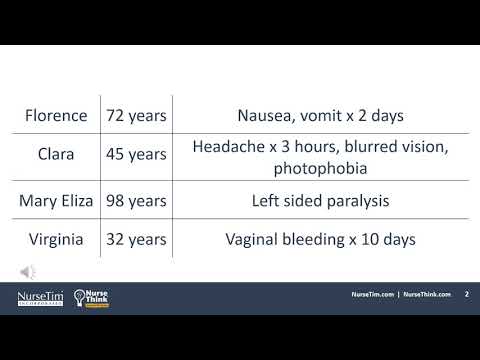
Compare and contrast 4 cases with different presentations. Students can be challenged with not understanding why each patient does not mimic the textbook. This activity allows students to see variations.
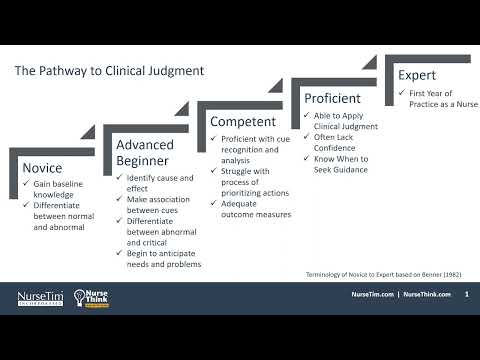
Students do not understand how to apply clinical judgment on the first day of nursing school; it is a process that takes time and lots of...
Students do not understand how to apply clinical judgment on the first day of nursing school; it is a process that takes time and lots of repetitive practice. This video introduces the pathway of skill obtainment needed to become an expert in clinical judgment.
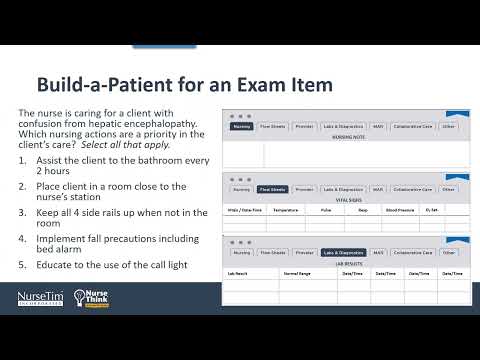
We know that creating is at the top of Bloom's Taxonomy. This activity allows your students to create a client as a method for exam remediation...
We know that creating is at the top of Bloom's Taxonomy. This activity allows your students to create a client as a method for exam remediation which will allow for a deep level of understanding material.
When we look at Bloom's Taxonomy, creating is found at the top. What does that mean, and how often are our students using that level of...
When we look at Bloom's Taxonomy, creating is found at the top. What does that mean, and how often are our students using that level of understanding? This activity allows students to create while applying clinical judgment and practicing Next Gen items.
Cue Clusters allow students to associate information that is related and more deeply analyze cues. By providing cue prompts, you can evaluate...
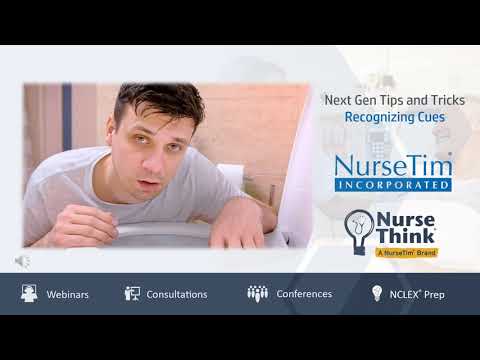
Cue Clusters allow students to associate information that is related and more deeply analyze cues. By providing cue prompts, you can evaluate how your students make connections, strengthening their ability to apply clinical judgment.
Clinical is the optimal experience for applying clinical judgment and decision-making, yet often students are excluded from the decisions that...
Clinical is the optimal experience for applying clinical judgment and decision-making, yet often students are excluded from the decisions that are being made. In order to build these skills, students need to consciously and repetitively think through the application of clinical judgment. Here is a suggestion on how to make your clinical paperwork more meaningful in developing thinking.
Layer 4 of the NCSBN Clinical Judgment Measurement Model reinforces the importance of environmental and individual factors in clinical judgment...
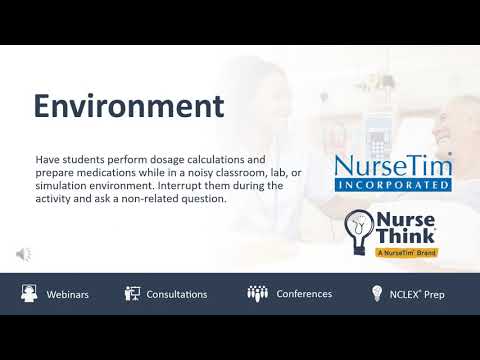
Layer 4 of the NCSBN Clinical Judgment Measurement Model reinforces the importance of environmental and individual factors in clinical judgment and decision making. This short video gives you five tips for adding context to your teaching activities to better prepare your students for practice.
Curveballs, cue cards, what-if cards, etc., are a great way to stimulate on-the-fly, deeper thinking, clinical judgment decisions in your...
Curveballs, cue cards, what-if cards, etc., are a great way to stimulate on-the-fly, deeper thinking, clinical judgment decisions in your students. As students are in the lab or clinical and appear to lack engagement, hand them a What-if Cue Card. This index card has an assessment change, situation, or cue that may or may not require the nurse to act. Examples include a client whose NG tube was removed yesterday and now feels nauseated; a dressing change with a foul odor; a CIWA score of 16; or a teenaged client found smoking in the hospital restroom.
No Video Available
#3
December 2022
Prioritizing Hypotheses with Unfolding Cases
The development of the ability to identify priorities is challenging for most students. Unfolding Priorities is a simple activity to incorporate...
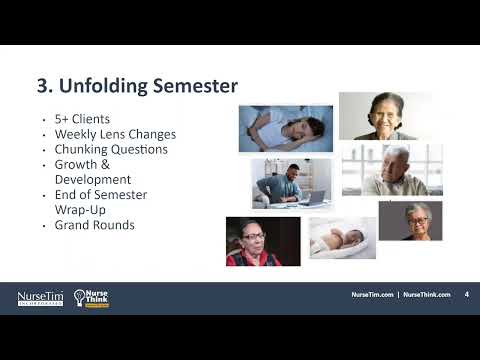
The development of the ability to identify priorities is challenging for most students. Unfolding Priorities is a simple activity to incorporate into class. Give students a single snapshot view of multiple patients; after discussing the priorities, unfold another layer of information and discuss how the priorities have changed. Know that there is not always a best answer but encourage students to discuss and justify their decisions.
An activity for EHR review. Have your students explore an EHR using one you have developed or used in simulation. Without any prompts, they must...
An activity for EHR review. Have your students explore an EHR using one you have developed or used in simulation. Without any prompts, they must analyze the cues in the EHR and determine if a particular medication is safe and indicated at this time. Ask the student to make the decision based on the information in the chart and mark the medication as Give, Question, or Hold. Request rationale for their decision. Alternate delivery methods include pair or small group work, whole-class voting, reviewing the EHR before class or clinical, or providing access at the start of class and giving students five minutes to decide.
No Video Available
#1
October 2022
Building Cue Recognition by listing Actual and Potential Cues
Give your students a short scenario and have them list 10 cues that they might see indicating an actual or potential problem.
Give your students a short scenario and have them list 10 cues that they might see indicating an actual or potential problem.
 OADN
OADN