
A Changing Landscape and How OADN Is Here to Help
Dear Colleagues,
The work you lead has rarely been more consequential. Across the more than 1,100 community-based college nursing programs OADN represents, you prepare the nurses who staff rural hospitals, behavioral health, long-term care, and community clinics, where the shortage bites hardest. When the rules governing how nurses are educated and financed shift, it lands first on your desks. You should not have to carry that alone. OADN exists for exactly this moment.
What is actually changing
On June 24, 2026, a federal judge in Washington, DC stayed the U.S. Department of Education’s narrow “professional degree” definition in the RISE rule, days before it was set to take effect (AACN; NAICU). For now, graduate nursing programs that meet the pre-existing three-part statutory test can still qualify for the higher $50,000 annual / $200,000 aggregate professional loan limits while litigation proceeds (Thompson Coburn). The statutory graduate caps of $20,500/$100,000 and the elimination of Grad PLUS for new borrowers still take effect July 1, 2026; undergraduate ADN programs remain unaffected (U.S. Department of Education). Expect rapid Department guidance, an appeal, and continued legislative action, including the bipartisan House appropriations amendment to reclassify advanced nursing as professional. Meanwhile, concurrent ADN-to-BSN partnerships let students finish both within a year of the ADN, advancing the NEPIN goal OADN helped co-found.
Why your work matters more than ever
The 2024 NCSBN survey found 34.2% of RNs earned their initial license through an ADN program, preparing roughly 84,000 new RNs each year. With BLS projecting 189,100 RN openings per year through 2034, the community-college on-ramp paired with BSN bridges is the most strategic pathway the profession has.
How OADN is here to help
Your membership goes to work in five places. On advocacy, OADN’s national voice and advocacy training webinars give members ready-made language for legislators, regents, and donors. On leadership, the OADN Leadership Institute prepares emerging deans through cohort seminars, mentorship, and peer coaching at a member discount. On evidence, the OADN Research Hub gives you the data to defend your program and shape the research shaping the workforce. On faculty and student support, members access OADN Virtual Simulation Reviews, the Teaching and Learning in Nursing journal, and more. On financing and progression, tuition partnerships the American Sentinel College of Health Sciences at Post University and and others, plus OADN Foundation scholarships and grants, help your graduates and faculty pipeline.
A simple ask
Tell us what you are hearing on campus, from MSN/DNP-bound students rethinking cost to articulation partners renegotiating terms, so our advocacy reflects ground truth. And use what is already yours: webinars, Research Hub, Foundation funding, discounts, and Convention.
Questions worth carrying
- Which OADN resource would most strengthen my program in the next 12 months, and have I used it?
- What financing or pipeline question does my campus need OADN’s help answering?
- Whose office (legislator, regent, donor) needs our outcomes data this year, and have I asked OADN to help?
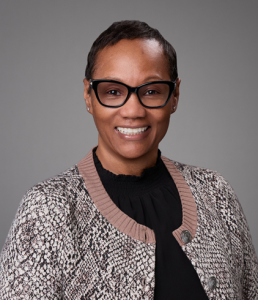
To every dean, director, and faculty leader in the OADN community: thank you. The country has asked an enormous amount of your programs and is about to ask more. OADN is here, and we will keep showing up alongside you. With deep respect and gratitude, Marilyn McGhee Ph.D. Public Director, OADN Board of Directors